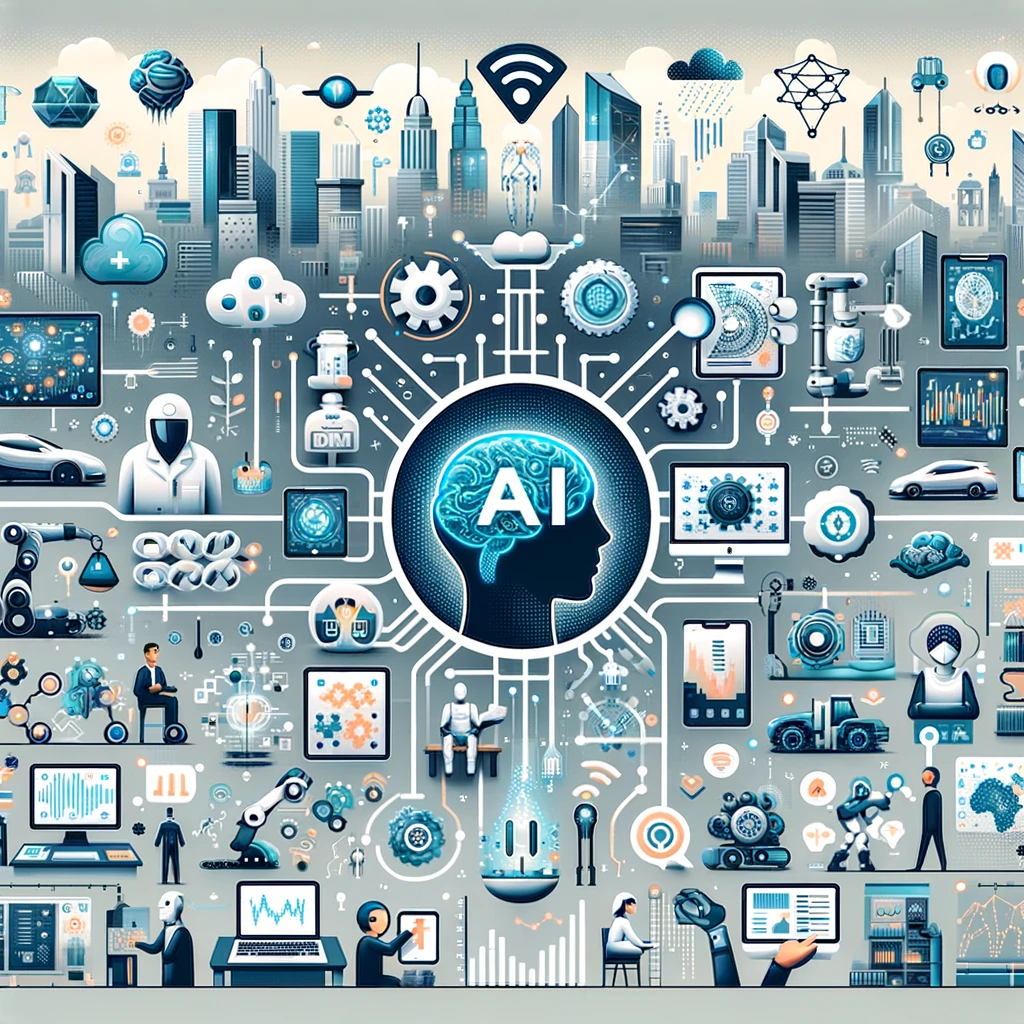
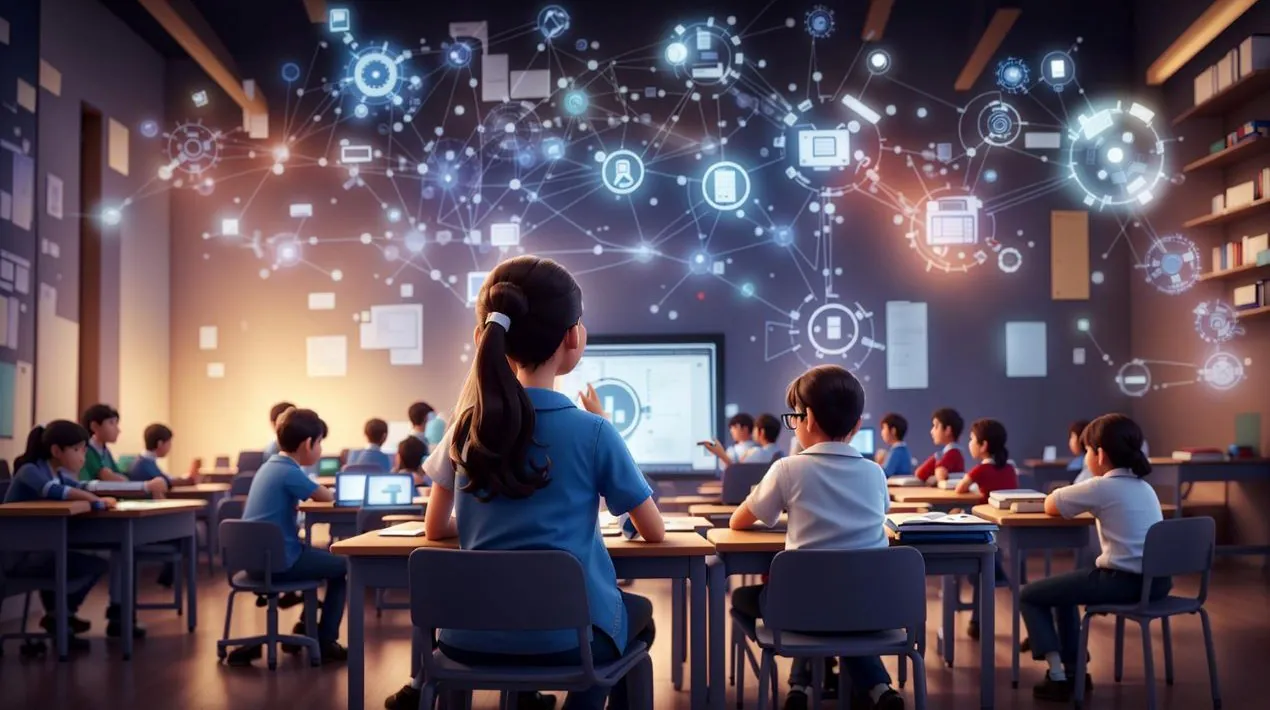
Technology is increasingly interfering with daily life, and especially in education. Artificial intelligence is leading the way in finding new answers to age-old questions. School of Scholars embraces this trend, incorporating AI into their teaching to prepare students for the bright future that lies ahead.
Table of Contents
How does AI affect education?
AI opens a new chapter in education, revolutionising it by making it dynamic and personalized and creating efficient environments for learning. It allows teachers to create curriculums that are tailored for each student’s learning style, making it more accessible and inclusive. AI algorithms, for example, analyse student performance data in order to identify specific areas of difficulty and suggest tailored resources.
AI also automates time-consuming processes such as attendance and grading. This allows teachers to focus on more meaningful interactions with students. AI-driven analytics help school administrators to see more general patterns of student performance and make tactical improvements. This type of integration improves the efficiency of teaching and fosters a culture that encourages continuous learning in students.
AI Tools for Education
AI transforms classrooms through a variety advanced tools that each bring unique and effective benefits to the educational experience.
Intelligent Tutoring Systems (ITS)
These systems act as personal tutors and adapt to each student’s learning style. This system provides students with lessons tailored to their learning style and speed.
If a student has difficulty with mathematics, for example, an app such as Carnegie Learning will help him understand fractions by giving him easier explanations and illustrations. As the student gains more confidence, he will be able to move onto harder problems. The student can learn step-by-step.
AI-Powered Learning Management Systems
These platforms organize learning materials and provide students with the input they require for their progress. This also allows teachers to keep an eye out for students who need extra help.
A platform such as Moodle will recommend videos, quizzes or notes based upon what the student already knows and has studied. If a student has a weak history background, for example, the platform may suggest extra lessons in history or practice tests.
Natural Language Processing Tools
Students can improve their communication and writing skills with the help of NLP software that analyzes grammar, vocabulary and sentence structure.
A tool such as Grammarly can help students to write emails or essays. Grammarly offers tips on how to write more clearly and professionally.
Automated Assessment Tool
These tools make the grading process faster and more fair. This allows them to easily check not only multiple-choice responses, but also written assignments and essays.
A tool such as Gradescope, for example, helps teachers grade class tests by evaluating answers, highlighting mistakes and showing students where they need to improve. This tool saves teachers time and provides students with faster feedback.
Virtual Reality and Augmented reality (VR/AR), with AI
Combining AI with VR and AR can create exciting learning experiences. It makes topics more interactive and realistic, which helps students better understand them.
Students can, for example, explore ancient Egyptian Pyramids with Nearpod as if they were there. In biology, students could use VR to “walk” through a 3D heart and see how it functions.
Chatbots and virtual assistants
They respond immediately and help in their understanding because they are always online and instantly accessible.
A student, for example, uses a chatbot like ChatGPT to prepare for an exam. When asked, “What is the formula for speed?”, the chatbot immediately replies “Speed = Time / Distance.”
The benefits and disadvantages of artificial intelligence in children
Merits:
- AI Personalised Learning: AI personalises training by adapting it to the needs of each student. This improves retention and engagement.
- Gamified learning platforms encourage creativity, logical thinking, and problem solving through gamified experiences.
- Accessibility: AI offers text-to speech assistance, adaptive tools and real-time translator capabilities to eliminate barriers between students who have disabilities and those without.
- AI provides continuous feedback to students, enabling them to receive immediate feedback and prompt remedial action.
- Global Exposure: Information and materials from around the world are available, allowing them to develop a more comprehensive view.
Demerits:
- Over-reliance on AI: Students who rely on AI to provide all their answers may be less creative and less original.
- Data Privacy Issues : Many AI systems collect and store a large amount of personal data, raising serious security and abuse issues.
- Reduced Interpersonal Skills: Face-to-face interaction is declining, and an over-reliance of AI could hinder the development of interpersonal skills.
- Digital Divide and Economic Inequality: A digital divide could result in increased inequality if not everyone is able to purchase AI equipment.
Future of AI Education
The future of AI is very exciting, with endless possibilities.
- Hyper-Personalized learning: AI allows the curriculum to be dynamically changed to meet the needs of each individual student, improving effectiveness and happiness.
Imagine a student that struggles with math, but enjoys learning from videos and visuals. AI can adapt the curriculum so that it offers interactive math problems and video-based lessons that are tailored to each student’s preferences. This helps the student understand better and makes sure they make steady progress.
- Global Cooperation: AI based edtech platforms will allow students to receive education from across geographic borders, and to gain knowledge of diverse cultures and perspectives.
- Real-Time Analysis: To achieve better results, schools are using AI analytics to predict and correct learning problems before they become serious.
The future of AI promises an education that is inclusive, effective and relevant to the real-world demands and challenges.
How can AI help parents and children?
Parents:
- Get regular updates and detailed information on your child’s development.
- A parent, for example, can use an AI app to send weekly updates about their child’s progress. It will highlight strengths and areas where they struggle, such as fractions, while also suggesting resources that could help. The parent is kept informed and engaged.
Children:
- Learn at their own pace with a learning experience tailored to your style.
- You can get help with assignments and queries on demand, encouraging independent learning.
Adaptive tools can help you overcome barriers based on language or disability. Disability can be classified into:
- Visual impairments: Screen readers and voice commands allow learning without the need for sight.
- Lessons are accessible to those with hearing impairments using AI-powered captioning tools and sign language tools.
- Learning disabilities: (e.g. dyslexia) can be helped by reading assistants who highlight the text and provide audio assistance to help comprehension.
- Children with physical disabilities can benefit from speech-to-text software.
AI is a great tool for parents who are concerned with their child’s social life. AI technology allows parents to monitor online interactions more closely than before. Schools use software to analyze data such as the level of understanding by different students and then group them according to their needs.
AI allows students to learn from teachers at any time and anywhere. AI algorithms can be used to create unique tests, assignments and feedback related to assessment for students. AI can be a powerful teaching tool to help students achieve their goals. The School of Scholars, in order to better prepare for the challenges that this future will face, will bring this technology into the classroom.